Send the basicsNameplate, photos, condition and quantity
Sell used, surplus and scrap electrical transformers
Transformer Buyers in Florida
Have electrical transformers to sell in Florida? Recycling Transformers evaluates surplus, used, failed and scrap units for purchase and recycling. Send the nameplate, photos, quantity and pickup ZIP. We review the equipment and loading requirements before confirming an offer or pickup plan.
- Single units and multi-unit inventory
- Pad-mount, dry-type, power and pole-mount
- Purchase and pickup evaluated together
Tell us the locationPickup ZIP, access and release timing
Review the next stepPurchase, recycling and collection options
Before you sell
What affects a transformer offer in Florida?
The complete equipment and collection cost matter—not just the weight of the enclosure.
Ratings and reuse
Send kVA or MVA, primary and secondary voltage, phase and manufacturer. Matching a unit to demand may create value beyond its scrap materials.
Condition and completeness
Identify new surplus, removed-working, failed or damaged equipment. Include missing parts and available test history without guessing at operating condition.
Fluid and records
Tell us whether the unit is dry-type or liquid-filled. Provide existing oil and PCB records; unknown status is a fact to clarify, not something to hide.
Loading and freight
Provide the Florida ZIP, dimensions or weight if known, and site-access photos. Quantity, distance and lifting requirements influence collection feasibility.
Authentic transformer equipment
The equipment details a buyer needs to see
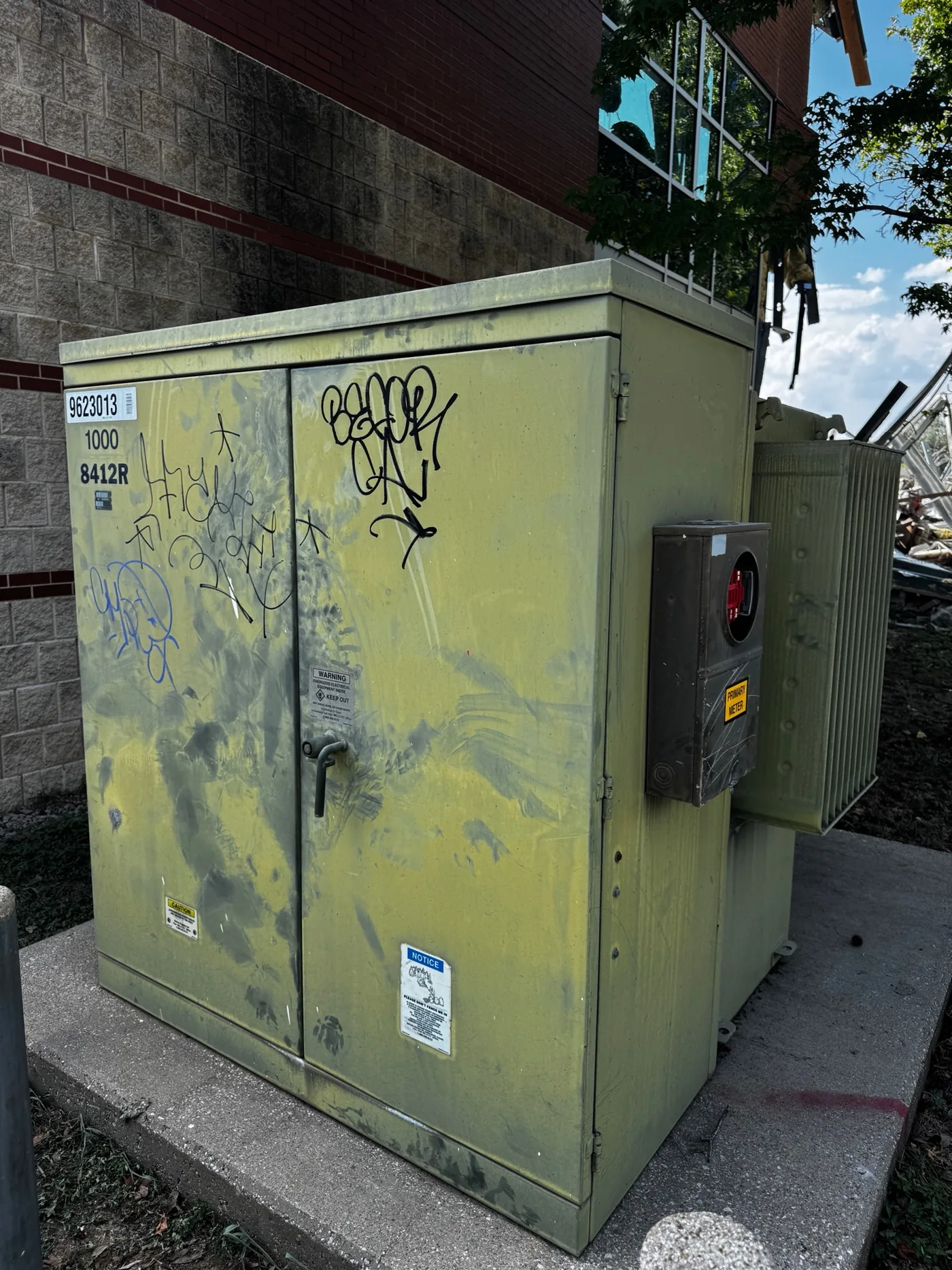
These owner-supplied photographs show complete transformers and visible equipment condition. For your Florida inquiry, send your own full-unit and nameplate photos. The gallery illustrates equipment types, not a local yard or a claim that these units were collected in Florida.
Send your transformer photos


Sell used, surplus and scrap transformers in Florida
Recycling Transformers evaluates electrical transformers from contractors, industrial facilities, utilities, property owners and equipment dealers in Florida. Purchase inquiries can include new surplus inventory, removed-working units, inactive spares and failed equipment. Pad-mounted, pole-mounted, dry-type, power and substation transformers need different evaluations, so identify the equipment rather than treating every unit as mixed scrap. A complete transformer may have reuse or component value as well as recoverable metal. Tell us whether you are selling one unit, clearing a storage yard or releasing equipment from a larger project. The review considers both the asset and what it will take to collect it.
Start with a readable nameplate photo and two or three photographs of the complete transformer. Include quantity, known condition and the Florida pickup ZIP. If available, share manufacturer, kVA or MVA rating, primary and secondary voltage, phase, dimensions, weight and existing test records. For liquid-filled units, include known fluid information and PCB documentation; use “unknown” where records are missing. Describe whether the unit is disconnected, who owns it and whether loading equipment is available. You do not need to have every technical answer before contacting us. Existing photographs and records are enough to begin a conversation without opening or moving equipment.
Florida environmental context makes records-first screening important
Age, fluid history, markings, service records, prior test records, and any known damage can change the path of a transformer review. EPA explains that PCBs were used in electrical equipment, including transformers, and that products made before the 1979 U. S. manufacturing and import ban may still contain PCBs. EPA also identifies transformer leaks and improper disposal as possible routes for PCB releases. Florida DEP separately notes that mineral oil dielectric fluid is used in electrical transformers and that its streamlined MODEF cleanup protocols do not apply to transformer fluids above 50 parts per million PCBs. These sources support a records-first approach; they do not classify a particular unit.
Florida DEP’s hazardous-waste summary says a hazardous-waste determination must be made for generated waste and describes authorized management requirements when material is hazardous. That statewide regulatory setting is a reason a preliminary buyer review cannot decide a unit’s PCB status, waste status, handling obligations, or required documentation. Those questions belong with the owner’s qualified environmental professionals, counsel, appropriate regulators, and properly qualified service providers. A seller can provide existing nameplate, fluid, maintenance, and incident records for review without treating a commercial inquiry as a compliance opinion or a substitute for the responsible parties’ due diligence.
- Preserve existing nameplate, fluid, maintenance, and disposition records
- Describe known leaks, damage, containment conditions, or site restrictions without internal inspection
- Use official agencies and qualified professionals for regulatory conclusions
Freight and storm conditions make Florida logistics site-specific
Florida DOT’s Freight Mobility and Trade Plan is a statewide framework identifying freight facilities important to economic growth and guiding multimodal investment. Its 2024 plan also calls for a more resilient freight system that can prepare for, respond to, and recover from disruptions. That is useful context for a Florida transformer project, but it is not evidence that a particular facility has a workable truck route, rail option, staging area, permit path, or destination. Dimensions, approximate weight, road and gate geometry, clearance constraints, laydown room, operating status, route conditions, and third-party approvals are project-review considerations that must be evaluated by the responsible parties and qualified logistics professionals.
Florida DEP maintains hurricane information, storm-generated-debris resources, and environmental emergency contacts. In that setting, storm timing, local access limits, facility conditions, and recovery priorities can affect whether a project can be evaluated or sequenced when expected. This is a planning consideration, not a promise of emergency response, recovery service, or pickup. A site near an interstate, port, rail line, or major city may still have restrictive access, operational controls, or unsuitable timing. Conversely, a location outside a metro area is not automatically excluded. The review asks for actual site facts rather than relying on a map label or statewide transportation context.
- Provide a general site area and known access, laydown, or scheduling constraints
- Do not assume a nearby port, rail line, interstate, or metro location proves route feasibility
- Treat severe-weather and site-operating conditions as timing considerations, not service guarantees
Statewide service context, not a Florida footprint claim
For geographic context only, Florida inquiries may originate in Miami–Fort Lauderdale–West Palm Beach, Tampa Bay, Orlando–Central Florida, Jacksonville–Northeast Florida, the Space Coast, Southwest Florida, the Treasure Coast, the Florida Panhandle, or other parts of the state. These are nearby-market references used to describe the statewide scope of a nationwide review process. They do not identify branch locations, yards, personnel, buying territories, utility relationships, recycler relationships, or automatically covered pickup zones. A project in any listed market remains subject to its own equipment, documentation, site, environmental, logistics, timing, and commercial review.
That distinction matters because Florida project conditions can differ substantially even within one region. A facility-controlled access point, tenant or utility authorization, shutdown schedule, owner documentation, distance from a practicable downstream option, or storm-related disruption can shape whether a project is viable. The service does not infer readiness from a city name, industrial district, or coastal or inland location. It does not claim local removal capability. The only accurate expectation is a fact-based review of the specific opportunity; some submissions may need more information, and others may not be a fit.
- Market names are geographic references only, not office locations or service commitments
- Urban, coastal, inland, rural, and Panhandle sites each require an individual review
- A workable transaction depends on actual project facts rather than regional assumptions
Request a transformer purchase evaluation in Florida
Include the actual equipment location when requesting a Florida evaluation. Regional references in this guide include Miami–Fort Lauderdale–West Palm Beach, Tampa Bay, Orlando–Central Florida, Jacksonville–Northeast Florida, Space Coast, Southwest Florida, Treasure Coast, Florida Panhandle. The pickup ZIP and access details are more useful than a city name alone. A facility yard, basement, equipment vault or substation can require very different loading arrangements. Tell us whether a gate, doorway, overhead obstruction or soft ground limits access, and provide documented dimensions and weight when available. For units still in service, include the expected release window and the authorized site contact. These facts let equipment value and collection requirements be considered together before a transaction is confirmed.
Call Recycling Transformers or send your equipment details through the simple inquiry form. For a single transformer, share your contact number, the Florida pickup ZIP and available photographs. For a lot, number each unit and match its nameplate image to the inventory list. We review rating, condition, reuse or recovery potential, fluid records and collection requirements. Any offer should identify the equipment included, inspection conditions, payment terms, loading responsibility and freight arrangements before release. Purchase and pickup depend on that confirmed scope. Keep the transformer intact and let qualified electrical, environmental and lifting professionals handle any work the site requires.
- Share existing facts rather than performing work to prepare an inquiry
- Expect case-specific questions and an individual outcome, not an instant offer or scheduled pickup
- Use official emergency channels and qualified professionals for incidents or compliance decisions
Sell your electrical equipment
All transformer buyer information Get buyer information for your transformer type

Pad-mounted transformer buyers
Cabinet condition, voltage, fluid records and pickup from the equipment pad.
See what to sendDry-type transformer buyers
Nameplate ratings, condition, enclosure and indoor loading access.
See what to send
Scrap transformer buyers
Failed units, intact equipment, recoverable materials and collection costs.
See what to sendOfficial references
Florida environmental and transport resources
These sources explain the state-specific context below. Qualified professionals should confirm requirements for the actual equipment and site.
Florida Department of Environmental Protection — Summary of Hazardous Waste RegulationsFlorida hazardous-waste determination, authorized-management, generator, transporter, and recordkeeping context; not a classification of any specific transformer.Florida Department of Environmental Protection — Mineral Oil Dielectric Fluid Cleanup ProtocolsOfficial Florida transformer-fluid and MODEF cleanup-protocol context, including the stated PCB limitation.Florida Department of Transportation — Freight Mobility and Trade PlanOfficial statewide multimodal freight-planning and resilience context for site-specific logistics review.Florida Department of Environmental Protection — Hurricane InformationOfficial storm, debris, environmental emergency, and recovery-resource context for Florida project timing.U.S. Environmental Protection Agency — Learn About Polychlorinated BiphenylsFederal PCB background, including legacy use in transformers and potential release pathways.
Seller questions
Before selling a transformer in Florida
Start with existing photographs and records. Do not open, drain, disconnect or move equipment just to obtain a quote.
Can I sell used or scrap transformers in Florida?
Send used, surplus, failed or scrap electrical transformers for a purchase evaluation. Include nameplate photos, quantity, condition and pickup ZIP. We compare reuse or recovery potential with fluid records and loading requirements, then discuss purchase and collection options for equipment that qualifies.
Can you buy every transformer in Florida?
No. Equipment is not automatically purchased. Potential fit depends on the specific equipment, available records, condition, ownership authority, site access, environmental context, timing, logistics, and commercial feasibility. Some inquiries need more information, and some may be outside the service’s scope.
What information helps with transformer recycling review in Florida?
Provide existing manufacturer or nameplate information, quantity, general site area, safely obtainable exterior photographs, known condition, available fluid or service records, and known access or timing constraints. No inquiry requires opening, draining, sampling, disconnecting, climbing, rigging, or moving equipment.
Does a project review determine PCB or hazardous-waste status?
No. A commercial review is not a legal or regulatory determination. EPA identifies older electrical equipment as a potential PCB context, and Florida DEP provides waste-management, transformer-fluid, hurricane, and emergency resources. Consult qualified environmental professionals, counsel, appropriate regulators, and service providers for equipment-specific conclusions and required actions.
Nationwide transformer buyers
View all 50 states and DC Choose another equipment location
Start with the facts
Have transformers to sell in Florida?
Send your name, phone number, pickup ZIP and available photos. We will review purchase, recycling and collection options for your equipment.