208 / 240 / 480 / 600 V
Siemens SB documentation includes 208Y/120, 240 V delta, 480Y/277 and 600 V delta configurations. Preserve phase, wire count and the full voltage designation from your records.
We buy eligible used and surplus switchboards nationwide, including identified UL 891 distribution assemblies with fusible switches or circuit breakers. Tell us whether you are selling the whole board, selected sections or an incomplete lot, and what remains with it.
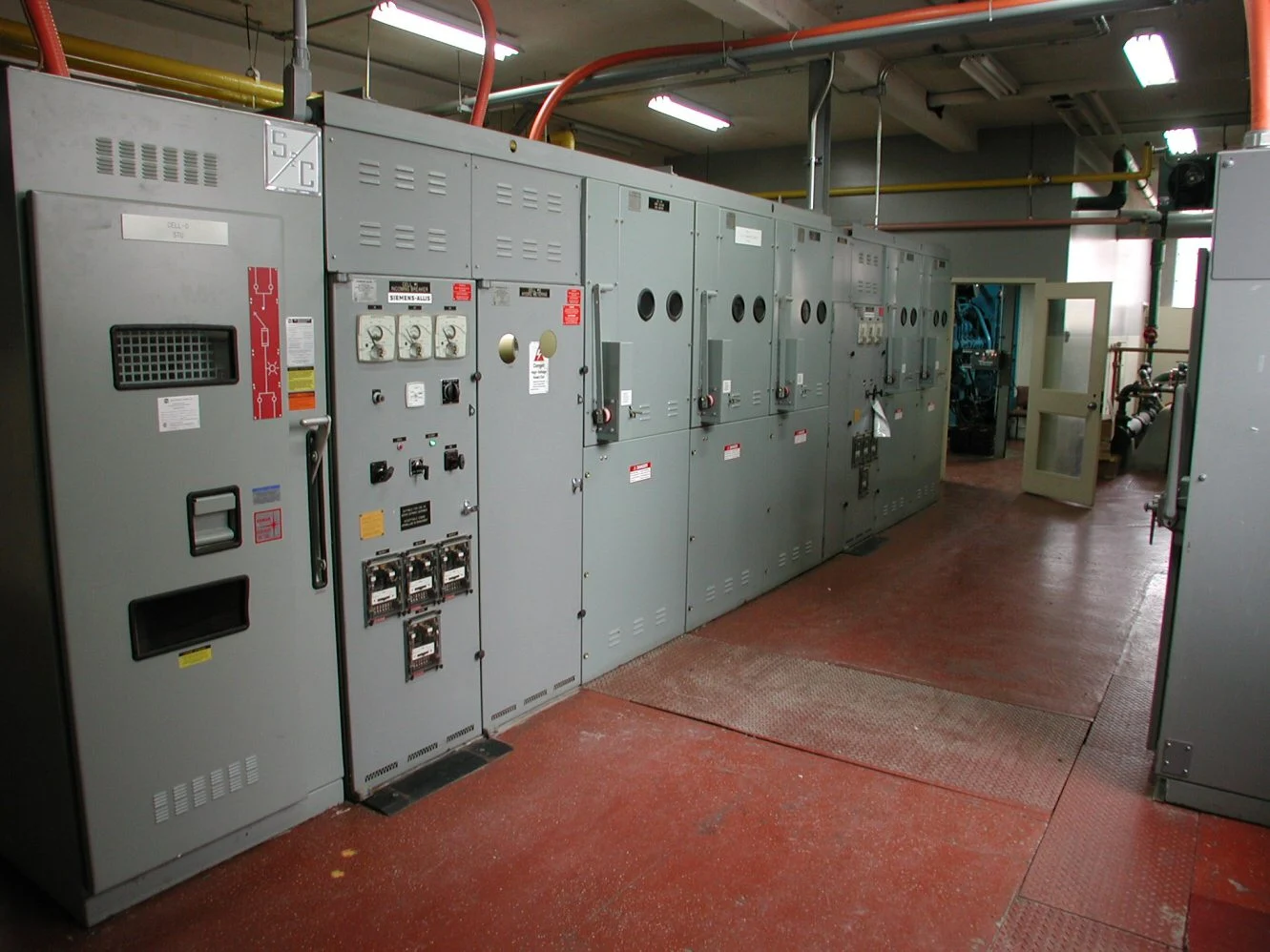
Nameplate, condition, included gear and pickup ZIP.
Equipment identification, value and agreed terms.
Preparation, loading and freight for accepted equipment.
These are manufacturer examples for identification—not a blanket list of interchangeable ratings or guaranteed purchase acceptance.
We buy eligible used and surplus switchboards from sellers across the United States. Offer equipment released by a service upgrade, a distribution redesign or an unused project order. Start with the manufacturer, product family and the number of sections available. Explain whether the board remains installed or has been removed, and whether the sale includes its main disconnect and feeder devices.
A switchboard inquiry should describe an electrical assembly, not just a row of cabinets or a total amp figure. Identify service, distribution and cable-pull sections separately where your drawings show them. If only part of the original board is offered, specify which sections are retained by the facility. Add the location ZIP, availability date and confirmation that you have authority to sell the listed equipment.
UL 891 switchboards are a different assembly category from UL 1558 low-voltage power circuit breaker switchgear. Eaton's manufacturer comparison explains this distinction and identifies deadfront construction with switchboards. Use the assembly label or original specification to establish the category. A floor-standing enclosure, a large main breaker or a front-access layout alone does not prove which standard applies.
Include any deadfront, service-equipment and series markings visible in existing label photographs. Deadfront describes the protective front arrangement; it is not permission to access live equipment or evidence of present condition. Drawout devices also do not automatically make a board switchgear: Eaton documents drawout switchboard designs. Preserve the actual product designation rather than promising switchgear interchangeability based on appearance or breaker style.
Siemens' switchboard guide lists configurations such as 208Y/120 V, 240 V three-phase delta, 480Y/277 V and 600 V three-phase delta. Those details are more useful than an isolated voltage number. Copy the known nominal supply, phase and wire count from existing records. A 480Y/277 V description conveys information that would disappear if the board were advertised simply as a 277 V cabinet.
Record maximum equipment voltage separately. The cited Siemens SB and Schneider QED-2 families have options through 600 Vac, but that ceiling does not mean every board operated on a 600 V supply. It also does not establish the suitability of an installed breaker for that voltage. Keep device markings intact, including slash-rated voltage designations, and leave the former operating voltage unknown when reliable records do not identify it.
Published Siemens main-bus ceilings are 2,000 A for SB1, 4,000 A for SB2 and 6,000 A for SB3. Schneider's QED-2 page separately describes standard designs up to 4,000 A and custom designs through 5,000 A. These are product-family examples, not automatic ratings for an offered board. Supply the actual assembly bus amperes and distinguish them from the main device's ampere marking.
Section identity matters because bus capacity may change within a board. Siemens describes tapered through-bus that reduces capacity as load is taken off downstream. A distribution section removed from a 4,000 A service lineup therefore should not be marketed as a standalone 4,000 A section without its own supporting records. Retain the original section order and report section-specific ratings where documented; do not add feeder breaker amperes to calculate bus capacity.
Switchboards can combine protective-device types. Schneider lists circuit-breaker and fusible-switch mains and feeders for custom QED-2 equipment, while Siemens documents several switch and breaker arrangements. Describe the main and feeder inventory independently. For a fusible device, provide the switch model and amp rating, then identify included fuses by their markings and quantities from available records. State when fuse positions are empty.
Typical molded-case and insulated-case switchboard breakers follow UL 489, as Eaton explains. For each significant breaker, distinguish frame capacity, installed continuous-current rating and trip-unit or trip-rating information. Adjustable settings are another detail, not a replacement for device identification. Include documented 80% or 100% continuous-rating information where available rather than assuming it from frame size. Keep catalog numbers with each position so a mixed board is not reduced to one misleading breaker description.
Short-circuit current rating, or SCCR, describes the assembly's fault-current capability under its specified conditions. Breaker interrupting capacity, often marked AIC, belongs to the protective device at a stated voltage. Schneider publishes QED-2 standard and custom SCCR ceilings of 100 and 200 kA respectively. Those figures do not establish the actual rating of your board, and the highest kA marking on a main breaker cannot substitute for the assembly label.
Siemens also explains fully rated and series-rated arrangements. A series rating depends on a tested upstream and downstream device combination, not merely two breakers sharing a manufacturer. Preserve combination labels and disclose replacement devices or missing upstream protection. Record the applicable voltage with every fault rating, and include duration for a separately documented short-time withstand value. These records identify the sale lot; they are not a new installation approval.
Document whether deadfront panels, exterior covers, filler plates and operating handles remain with the board. List loose bus-splice hardware, shipping-section parts and accessories separately, using existing inventories rather than opening compartments. Customer meters, surge protective devices and transfer controls should be specifically included or excluded. Utility meters and other utility-owned items must not be assumed to belong to the seller simply because they occupy the same enclosure.
Factory order information can connect separated equipment to its documentation. Schneider's QED-2 instructions describe order identifiers and shipping weights on shipping sections, and using the factory order number when seeking replacement documents. Supply available order records, section drawings and schedules. Never remove a deadfront, open an energized compartment or operate a switch to obtain sale details; access requiring electrical work belongs with qualified personnel under site procedures.
Distinguish unused project surplus from a board that previously carried load. Give known service and removal dates, storage conditions and the dates of available inspection or maintenance reports. Explain altered feeder arrangements, substituted breakers and missing fuses. Dated records help establish history, but a former working condition is not a current readiness claim. Photograph exterior damage only where that can be done safely.
Disclose water intrusion, condensation, corrosion, heat damage and fault events rather than treating them as cosmetic issues. Schneider's QED-2 instructions specifically address moisture contamination and warn that shipping packaging alone is not suitable storage protection unless labeled otherwise. Describe what actually happened to the equipment and any documented professional assessment. Do not clean internal parts or attempt repairs merely to improve a sale presentation.
A board's voltage and bus amps identify it; they are not a price formula. Commercial interest depends on the exact design, device inventory, condition and demand. Custom metering layouts or incomplete shipping sections can affect review differently from an intact distribution board. A clear inventory lets proposals address the same equipment instead of leaving valuable devices or necessary assembly parts outside the assumed purchase scope.
Provide documented dimensions and weights, shipping splits, access limitations and whether the equipment remains connected or anchored. Before accepting terms, establish who pays for and arranges electrical isolation, removal, preparation, loading and freight. Compare the amount you retain after agreed costs, not just a headline offer. The written agreement should identify included sections, excluded property, payment terms and transfer responsibilities; a nationwide inquiry does not itself guarantee pickup or acceptance.
Tell us the switchboard manufacturer/family, UL designation, full nominal voltage, equipment maximum, bus amps, section count, fusible or breaker device inventory, missing parts, condition, location ZIP and installed/removed status. Include available order records and existing label images only; do not remove deadfronts or access energized equipment.
Use the short form—no extra technical questionnaire. Purchase and collection responsibilities are confirmed for accepted equipment.
Call (951) 903-9804Yes, submit it as an incomplete lot rather than a fully equipped board. Identify the switch models, amp ratings and empty fuse positions from existing records. List any loose fuses separately with their class, voltage, amp markings and quantities; do not install or handle fuses for the inquiry.
No. Manufacturer switchboard designs can include drawout devices. Use the assembly's standard and product designation from its label or original documents, not the mounting style alone. Describe the breaker separately and do not claim interchangeability with a switchgear lineup.
List the known 480Y/277 V nominal system and the 600 Vac equipment maximum as separate facts. Preserve phase, wire count and device voltage markings. The maximum label does not establish the board's former supply voltage or the rating of every installed protective device.
No. Identify the seller-owned switchboard sections and customer metering separately from utility-owned equipment. Confirm authority to transfer each listed item and disclose anything retained by the utility or facility. A compartment's presence does not establish ownership of the meter or devices inside it.
Provide existing combination labels and the replacement breakers' catalog information, with the affected positions identified. Series ratings rely on tested device combinations, so a replacement cannot be assumed to preserve the original rating. Do not relabel or advertise the board at the former SCCR without supporting documentation.
Read the actual equipment records alongside the manufacturer references. Brand and product mentions do not imply dealership status or endorsement.